
Reliability in medical devices
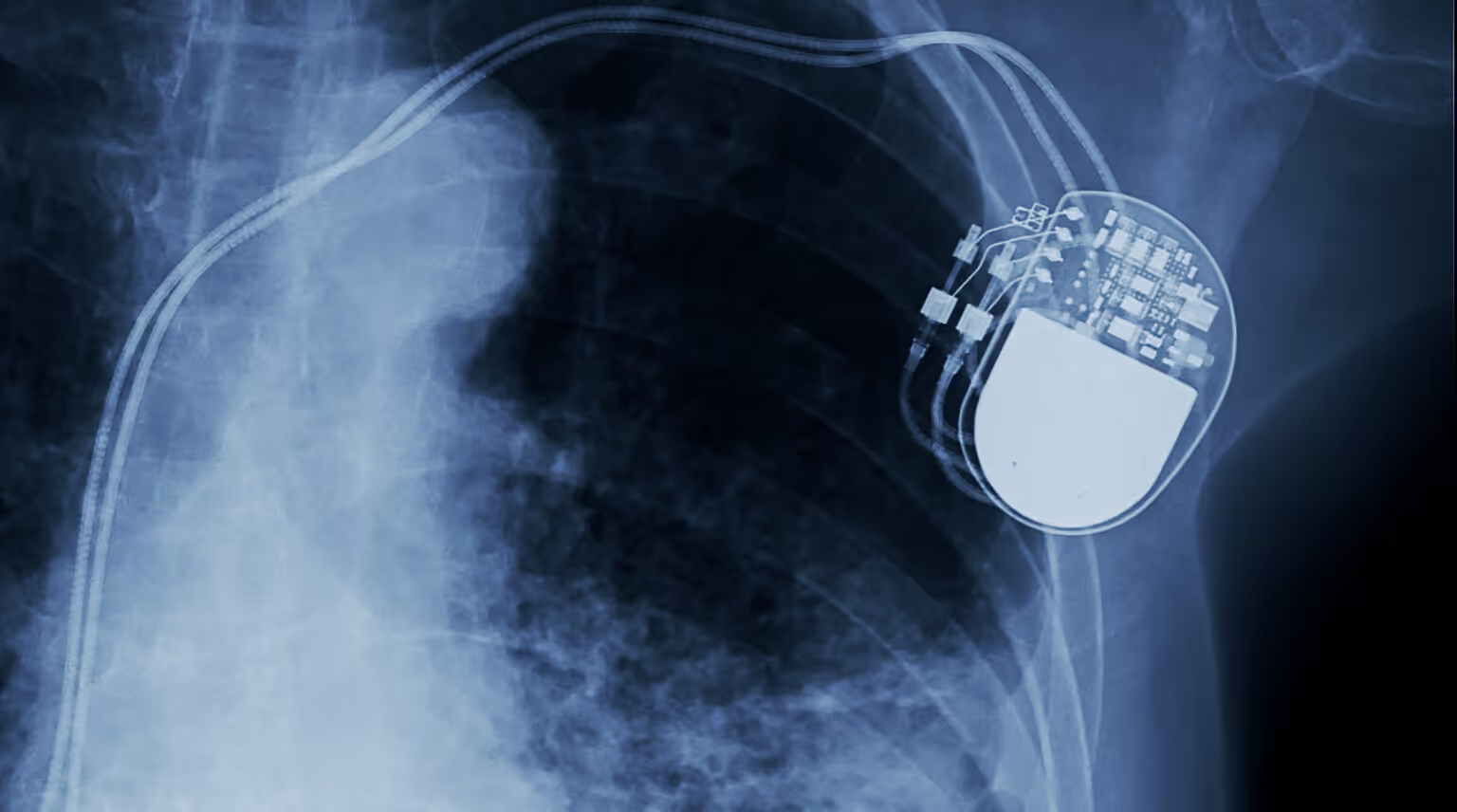
When we are dealing with medical devices, we expect them to be reliable. But what does reliability actually mean in this context?
Reliability is not trust
When we say we trust a device, we acknowledge that it does what it is supposed to do—for example, a thermometer that measures temperature, not air pressure.
Another level of trust is that the value displayed is accurate, such as 37°C for a healthy human. In that sense, we trust the thermometer to be reliable.
Reliability is not quality
Quality is central in the world of medical devices. When bringing a device to market, your Quality Management System (QMS) ensures that the device is safe and performs as intended.
We can rely on a device because of these strictly controlled processes—but quality itself is not the same as reliability.
Reliability is not safety
Medical devices must be safe, especially in such a highly regulated industry. Safety is ensured through strict guidelines from governments and industry standards.
A device on the market is typically very safe—but safety alone does not define reliability.
Reliability is not regulation
The medical device industry is heavily regulated. Both the US and EU have strict legislation, and standards like ISO 13485 ensure transparent and controlled processes.
Regulation contributes to building reliable devices—but it is not the same as reliability itself.
Reliability is not risk
Risk is defined as the probability of an event multiplied by its impact. Risk management helps minimize harm and is a critical part of the development process.
While managing risk contributes to reliability, it is still a separate concept.
What is reliability?
Reliability can be defined as:
Reliability is the probability, at a desired confidence level, that a device will perform its intended function, without failure, under stated conditions, for a specified period of time.
This definition includes four key elements:
- The device performs its required function
- The device operates without failure
- The device works under stated conditions
- The device performs over a specified period of time
In simple terms
A reliable medical device:
- Does what it is supposed to do
- Works without interruption
- Operates under expected conditions
- Continues to perform over time
All other aspects—quality, safety, regulation, and risk—support reliability, but they are separate dimensions.
This piece was inspired by the book “Reliable Design of Medical Devices” by Richard C. Fries.